
Skip to content

Department of Earth and Environmental Sciences Korea University

Seismology Laboratory

We study Earth structure, earthquake processes, seismic hazards, and environmental change using observational seismology, numerical modelling, Bayesian inversion, and machine-learning methods.

Featured recent research

All publications
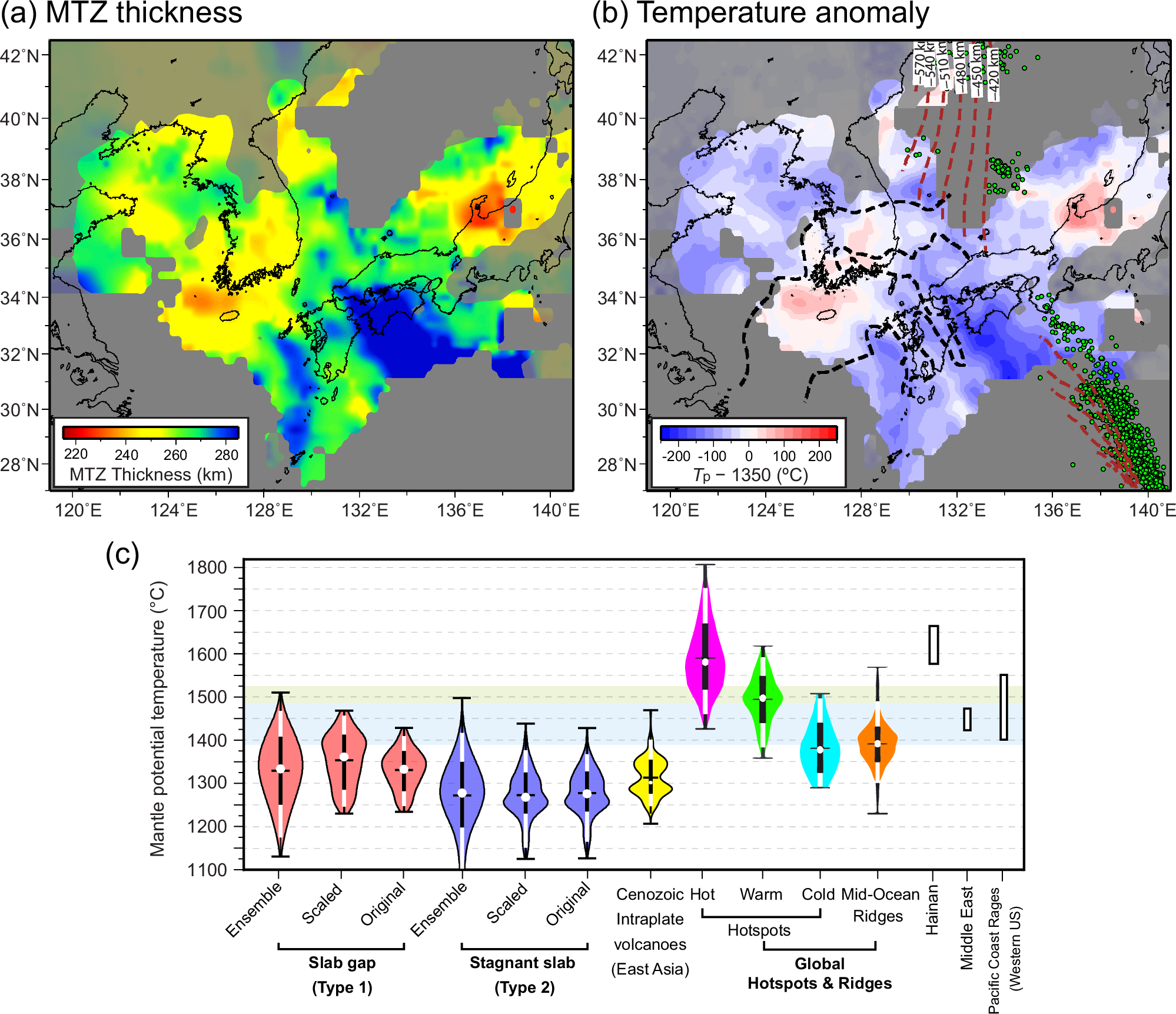
Maps of mantle-transition-zone thickness and inferred temperature anomalies beneath Northeast Asia, with violin plots comparing mantle potential temperatures.
Song et al. (2026), Nature Communications, Figure 5. · CC BY-NC-ND 4.0

No. 41 · Nature Communications ·

Continuous nonthermal slab gap formed by progressive tearing beneath Northeast Asia

The roughly 1,000-km arcuate gap has sharp lateral boundaries, temperatures more than 200 °C below plume-like conditions, and a planform aligned with the path of a migrating triple junction.

PI corresponding author Collaboration Open access
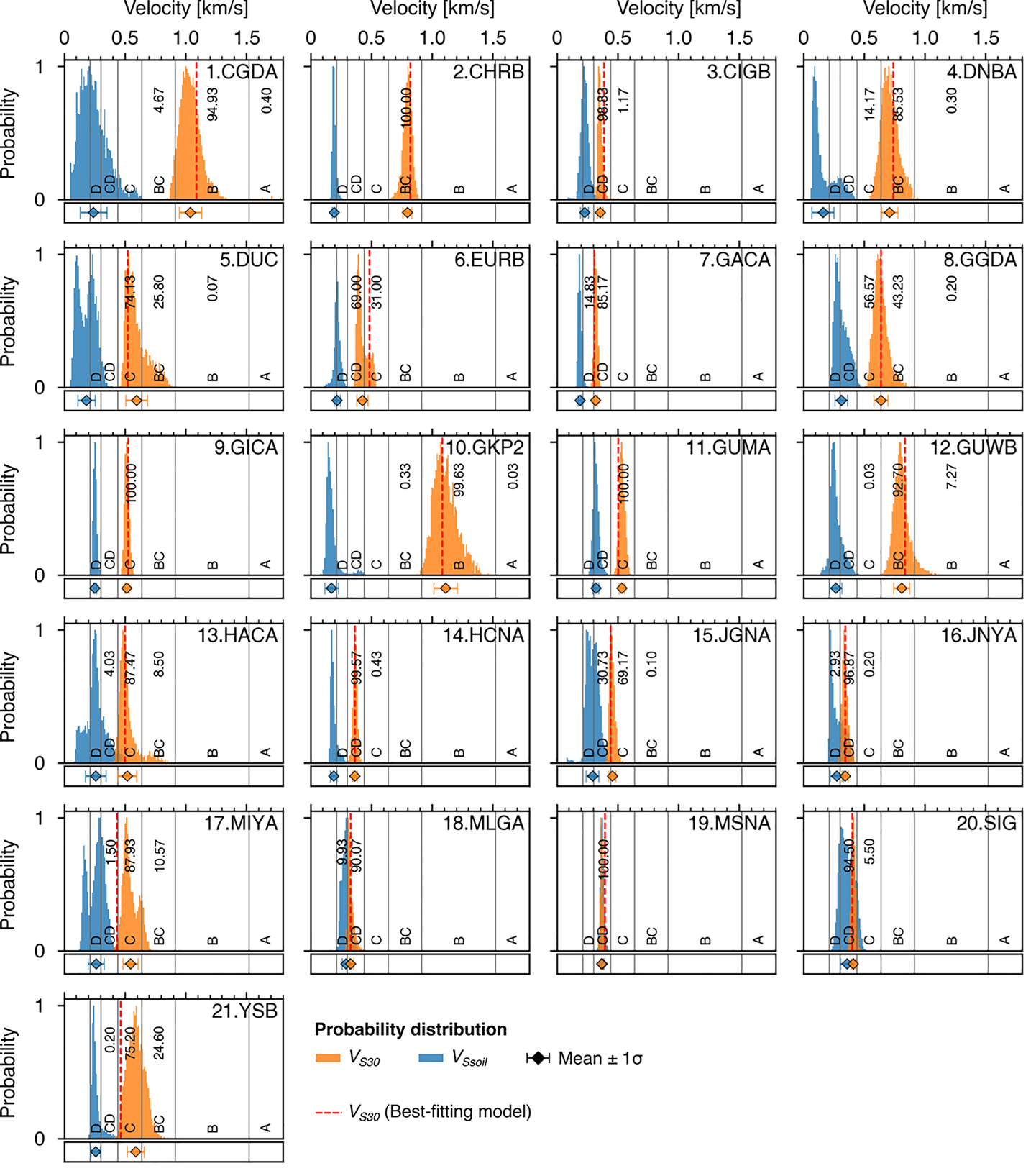
Marginal probability distributions of VS30 and VSsoil at 21 accelerometer stations, with NEHRP site-class boundaries and mean and standard-deviation markers.
Jeon et al. (2026), Bulletin of Earthquake Engineering, Figure 8. · CC BY-NC-ND 4.0

No. 39 · Bulletin of Earthquake Engineering ·

Probabilistic estimation of shear wave velocity profiles and site classes from surface wave surveys for accelerometer stations in the southern Korean Peninsula

Profiles extend to as much as 1,000 m and generally agree with borehole constraints; VS30, rock depth, and soil velocity yield site classes B–D.

Member-led PI corresponding author Collaboration Open access
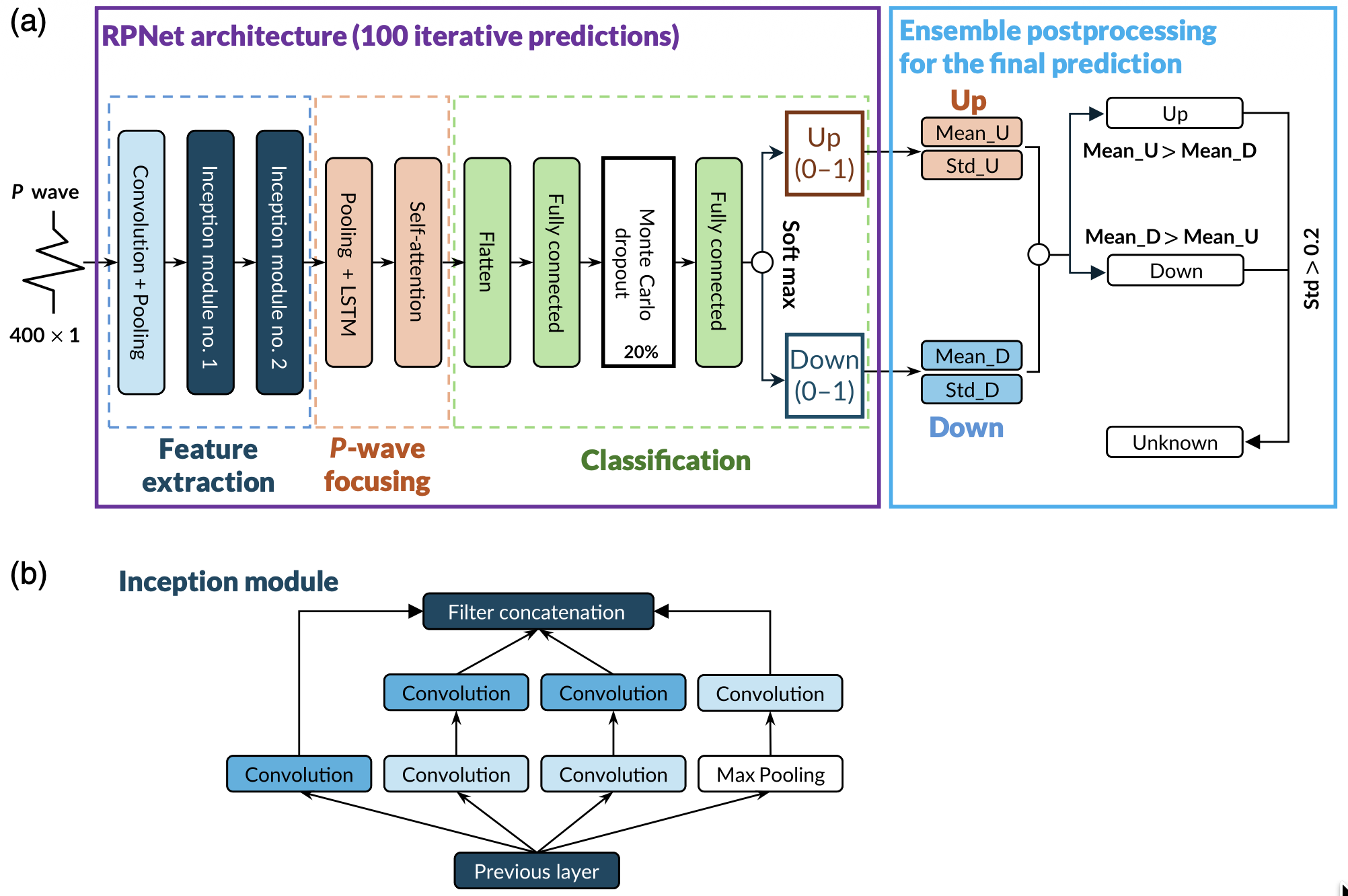
RPNet architecture and inception module. A P-wave waveform passes through convolution, inception, LSTM, self-attention, fully connected, and Monte Carlo dropout layers; one hundred iterative predictions are combined to classify polarity as up, down, or unknown.
Han, Kim, and Sheen (2025), Seismological Research Letters, Figure 1. · Author-provided image; reuse not permitted

No. 36 · Seismological Research Letters ·

RPNet: Robust P-wave first-motion polarity determination using deep learning

RPNet combines inception modules, self-attention, and Monte Carlo dropout to determine P-wave first-motion polarity while quantifying prediction uncertainty.

Member-led PI corresponding author Collaboration

Reference formats

Copy citation

Select a journal style, review the reference, and copy it without leaving this page.

Journal style

Reference preview